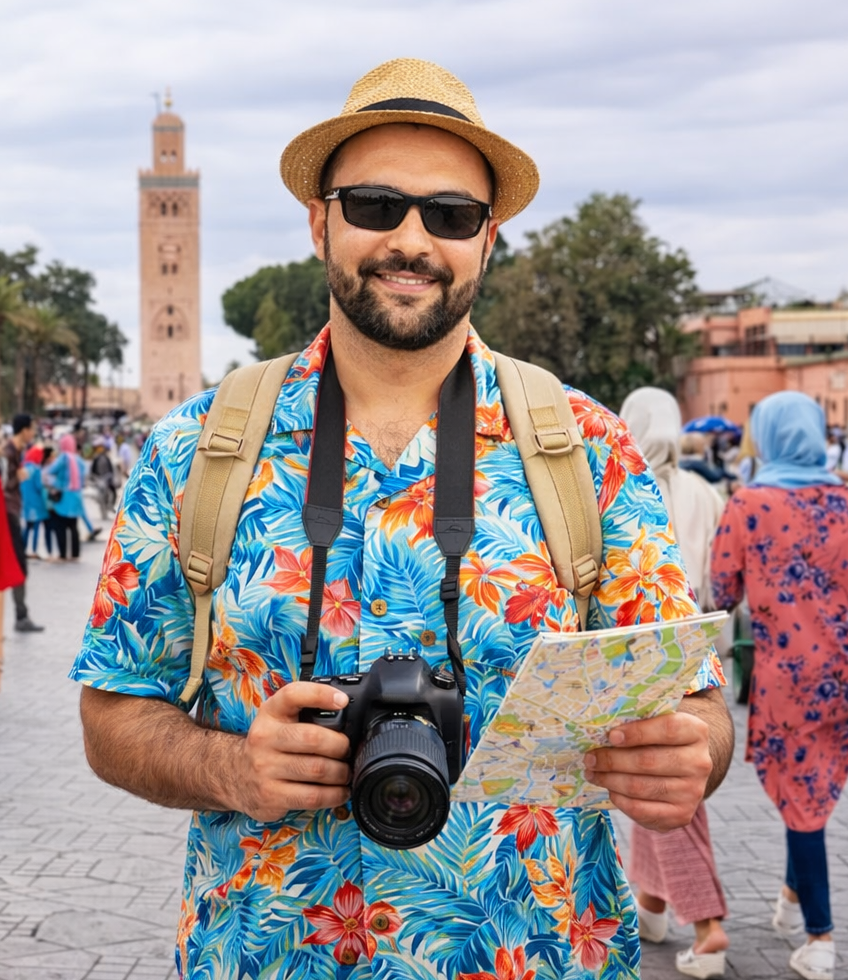
There are cities that are pleasant to visit. Then there are cities that pull at you — that lodge themselves inside your imagination long before you arrive, and refuse to let go long after you leave. Marrakech is emphatically in the second category.
The moment you step into the medina, the old walled city, all rules dissolve. Narrow alleys that smell of cumin and cedar suddenly open onto tiled courtyards of breathtaking elegance. Donkeys share lanes with motorbikes. Snake charmers share a square with storytellers who have been performing since before the age of Instagram. Marrakech — the Red City — is alive in a way that very few places on earth can claim.
This pillar guide covers everything you need to know about what to do in Marrakech, whether you have three days or three weeks. We've organised the best Marrakech attractions by theme — from ancient palaces and madrasa architecture to lush gardens, medina souks, traditional hammams, and adventure activities in the surrounding landscape. Every entry comes with practical tips drawn from years of living in and writing about this extraordinary city.
find de best hotels and riads in marrakech with price
At a Glance: Marrakech Essentials
Quick Facts About Marrakech
Ready to dive in? Below you'll find every major category of Marrakech experience — from the city's most celebrated landmarks to its most underrated pleasures.
Historical Attractions in Marrakech
Jemaa el-Fna — The Beating Heart of the Medina
No discussion of what to do in Marrakech can begin anywhere other than Jemaa el-Fna square. By day it's a staging ground for orange juice vendors, henna artists, snake charmers, and Gnawa musicians. By dusk it transforms into one of the world's great outdoor spectacles: hundreds of food stalls roll out across the square, smoke rises from dozens of grills, and the crowd swells to thousands. UNESCO has recognised it as an Intangible Cultural Heritage of Humanity — one of only a handful of urban spaces to receive that distinction.
Come in the late afternoon, climb to a rooftop café terrace, order a mint tea, and simply watch the square unfold. You could spend an hour doing this or, like many visitors, you could find yourself still there at midnight, unable to tear yourself away.
Koutoubia Mosque — Marrakech's Great Landmark
The 70-metre minaret of the Koutoubia Mosque has been orienting travellers across the plain of Marrakech for more than 850 years. Built during the Almohad dynasty in the 12th century, it served as the architectural template for the Giralda in Seville and the Hassan Tower in Rabat — a measure of its influence across the medieval Islamic world. Non-Muslims cannot enter the mosque itself, but the surrounding gardens are open to all and make a lovely spot for an evening stroll as the call to prayer echoes across the city.
Bahia Palace — A Riad Writ Large
Built in the late 19th century, Bahia Palace is the finest example of traditional Moroccan palatial architecture in Marrakech. Its name means "brilliance," and the interior delivers on that promise: eight hectares of zellij tilework, intricately carved cedarwood ceilings, and serene courtyard gardens that progress from intimate to palatial. It was designed to be the greatest palace of its time, and even in its partially furnished state today, it remains extraordinarily impressive. Budget at least 45 minutes — the scale of the complex surprises most visitors.
Ben Youssef Madrasa — Geometric Perfection
The Ben Youssef Madrasa is, in the considered opinion of many visitors, the most beautiful single interior in all of Morocco. Founded in the 14th century and extensively rebuilt in the 16th, it served as an Islamic school housing up to 900 students at a time. The central courtyard — its marble pool reflecting the carved stucco, intricate zellij tiles, and dark cedarwood screens above — is one of those moments in travel when you genuinely catch your breath. It reopened after extensive restoration and the results are stunning. Arrive early to beat the crowds.
El Badi Palace — Ruined Grandeur
What the El Badi Palace once was defies easy comprehension. Built by Sultan Ahmad al-Mansur in the 16th century, it was said to be one of the most magnificent palaces on earth — filled with gold, onyx, and Italian marble. Mansur reportedly asked a European ambassador to describe his palace; the ambassador replied, "When it is demolished, it will make a fine ruin." He was, as it turned out, exactly right. Today, those ruins — storks nesting on the battlements, orange trees growing where throne rooms once stood — have their own haunting majesty. The site also houses an important collection of Almohad minbar (pulpit) from the Koutoubia Mosque.
Saadian Tombs — Hidden for Three Centuries
The Saadian Tombs contain the mausoleums of members of the Saadian dynasty, sealed off by Sultan Moulay Ismail in the 17th century and not rediscovered until 1917. Inside the principal chamber are 66 bodies buried under intricate carvings of stucco and cedarwood of extraordinary refinement. The contrast between the grandeur of the decoration and the hush of the space makes this one of Marrakech's most affecting sites. Book timed entry in advance — the site is small and crowds can form quickly.
Dar Si Said Museum — The Decorative Arts of Morocco
Housed in a fine late 19th-century riad palace, the Dar Si Said Museum brings together one of the finest collections of traditional Moroccan decorative arts: carpets from the High Atlas, jewellery of the Berber tribes, Marrakchi woodwork, and arms and armour from across the centuries. It's less visited than the palaces and therefore gives a more contemplative experience — and the building itself, with its cedar-latticed windows and painted ceilings, is a work of art.
The Jewish Mellah & Slat Al-Azama Synagogue
Marrakech's Jewish Mellah, established in the early 16th century, is one of the oldest surviving Jewish quarters in Morocco. At its peak it was home to thousands of Jewish families who played a central role in the city's trade and craftsmanship. Today, the Mellah's distinctive balconied houses, the spice market, and the beautifully restored Slat Al-Azama synagogue tell a story of a layered, pluralist Marrakech that often goes untold. A visit here adds essential depth to your understanding of the city.
| Historic Site | Typical Opening Hours | Entry Fee (Approx.) | Best Time to Visit |
|---|---|---|---|
| Jemaa el-Fna | Always open | Free | Late afternoon–evening |
| Koutoubia Mosque Gardens | Daily, dawn–dusk | Free | Sunset |
| Bahia Palace | 9:00–17:00 (Fri close 11:30–15:00) | 70 MAD | Morning (9–10am) |
| Ben Youssef Madrasa | 9:00–18:00 | 70 MAD | Early morning |
| El Badi Palace | 9:00–17:00 | 70 MAD | Late afternoon |
| Saadian Tombs | 9:00–17:00 | 70 MAD | Weekday morning |
| Dar Si Said Museum | 10:00–18:00 (closed Tue) | 20–40 MAD | Midday |
| Jewish Mellah | Quarter: always open | Free (synagogue small fee) | Morning |
Gardens & Parks in Marrakech
Majorelle Garden — The Most Visited Garden in Africa
Few gardens in the world have a visual identity as distinctive as Majorelle Garden. Created in the 1920s by French artist Jacques Majorelle, the garden pairs an extraordinary botanical collection — bamboo groves, cacti from the Americas, water lilies from the tropics — with the electric cobalt blue that Majorelle made his signature. Yves Saint Laurent and Pierre Bergé rescued it from development in 1980, and after Saint Laurent's death his ashes were scattered here. Today it houses the Berber Museum, the Yves Saint Laurent Museum, and a stylish café. Book timed entry well in advance — particularly in spring and autumn when queues can be significant.
Menara Garden — The Olive Grove by the Atlas
If Majorelle is theatrical, the Menara Garden is serene. Established in the 12th century, this vast olive grove stretches out from a central reflecting pool and pavilion, with the snow-capped peaks of the Atlas Mountains forming the backdrop on clear days. It is one of Marrakech's great classical Moroccan garden spaces and far less crowded than Majorelle. Entry to the garden is free; there's a small charge to enter the pavilion. Come at sunset for one of the finest photographs in Morocco.
Le Jardin Secret — An Intimate Discovery
Le Jardin Secret, tucked into the northern medina, is one of Marrakech's most rewarding recent restorations. A historic 16th-century riad garden was painstakingly returned to life — an "Islamic garden" of geometric symmetry and an "exotic garden" of palms, cacti, and tropical plantings, separated by the original central reception pavilion. The rooftop terrace offers unobstructed views across the medina roofscape to the Koutoubia minaret. Smaller and more contemplative than the other gardens, it rewards a slow, unhurried visit.
Souks & Shopping in Marrakech
The Great Souks — Navigating the Medina's Market Quarter
The medina's souk district radiates north from Jemaa el-Fna, organised by trade in a system that has barely changed since the medieval period. The Souk Semmarine is the main artery — wide, vaulted, and lined with textiles, leatherwork, and Moroccan handicrafts. Branch off and you'll find yourself in the brass-workers' alley, then the dyers' quarter, then a lane of Berber jewellery. Getting deliberately "lost" in the souks is one of the great pleasures of Marrakech, provided you have time and a compass bearing back to Jemaa el-Fna.
For leather goods and bookbinding, head to the Souk Cherratine — one of the oldest craft souks in the city, where tanneries and leatherworkers have operated for centuries. The smell of hides and natural dyes is intense but authentic, and the quality of the work is exceptional.
Place des Ferblantiers — the Place of the Tin Workers — is one of the medina's most photogenic spots, where artisans hammer intricate lanterns and metalwork that flood the square with light after dark. Even if you're not buying, it's worth a visit simply to watch the craftspeople at work.
Ensemble Artisanal — Fixed Prices, Guaranteed Quality
If the idea of bargaining makes you anxious, the Ensemble Artisanal is an excellent alternative — a government-backed cooperative where artisans work in open workshops and all prices are fixed. You can watch a weaver working at a loom, a woodcarver producing intricate marquetry, or a zellige tiler cutting geometric shapes, then purchase their work at fair, transparent prices. It's also a useful benchmark for prices before you enter the souks.
For traditional Moroccan copper and brasswork, Marrakech is the best place in Morocco to buy — the craftsmanship is extraordinary, from hand-hammered serving trays to intricate lanterns and tea sets. Ask the vendor to explain the production process; most are proud to do so.
Modern Shopping in Marrakech
Not every visitor wants to spend their entire trip bargaining in the souks — and Marrakech's modern commercial quarter has expanded significantly to accommodate contemporary shopping preferences.
M Avenue is Marrakech's most stylish open-air shopping boulevard, home to high-end Moroccan designers, international brands, and some of the city's best restaurants. It's a genuinely lovely place to stroll — particularly at night — and offers a very different experience from the medina's intensity. For a more traditional mall experience, both Menara Mall and Al Mazar Mall carry international brands, cinemas, and food courts — practical if you need something specific or simply want air-conditioning on a hot afternoon.
Cultural Experiences in Marrakech
Moroccan Cooking Classes
Moroccan cuisine is one of the world's great gastronomic traditions — complex spice blends, slow-cooked tagines, paper-thin warqa pastry, preserved lemons, argan oil — and Marrakech is the ideal place to learn it properly. A half-day cooking class typically begins with a guided tour of the spice market in the souks, then moves to a riad kitchen where you'll prepare a full Moroccan meal: harira soup, chicken or lamb tagine, couscous, and bastilla. Several riads offer classes at an exceptionally high standard; book in advance, particularly in high season.
Gnawa Music & the Jemaa el-Fna Storytellers
The Gnawa are a spiritual and musical brotherhood of West African origin, brought to Morocco as enslaved people centuries ago, whose trance-inducing music — combining lutes, castanets, and call-and-response chanting — is one of Morocco's most distinctive cultural gifts. You'll hear them on Jemaa el-Fna most evenings, and during the annual Gnawa World Music Festival in Essaouira (a wonderful day trip from Marrakech). The square's Halqa storytelling tradition — circular crowds gathered around a single narrator weaving elaborate tales — is equally ancient and, though you may not understand the Arabic, the performance is mesmerising.
A Traditional Moroccan Hammam
The hammam is not merely a bath house; it's a social institution that has been central to Moroccan community life for centuries. A traditional hammam and massage in Marrakech takes you through a sequence of hot and cool marble rooms, a vigorous full-body exfoliation with a kessa glove and black soap, and a relaxing massage with argan or eucalyptus oil. It's simultaneously invigorating and deeply relaxing — and one of the most authentically Moroccan experiences available to visitors. We cover hammam etiquette, the best options for tourists, and what to expect in our dedicated guide.
Moroccan Skincare & the Argan Tradition
Argan oil — extracted from the fruit of the argan tree, native to southwest Morocco — has become a global beauty phenomenon, but in Marrakech you can experience it in its original context. A fascinating introduction to traditional Moroccan skincare reveals centuries of plant-based beauty wisdom: rose water from the Dadès Valley, ghassoul clay from the Atlas Mountains, prickly pear seed oil, and the black soap (beldi) that forms the centrepiece of the hammam ritual. Several cooperatives in the souks are genuine women's argan cooperatives; buying from them directly supports the producers.
Activities & Tours In and Around Marrakech
Day Trip to the Ouzoud Waterfalls
The Ouzoud Waterfalls — a roughly three-hour drive northeast of Marrakech — are the highest waterfalls in North Africa, plunging 110 metres through a landscape of red rock, olive groves, and wild Barbary macaques. A morning departure allows time to take the path to the base of the falls, swim in the emerald pool beneath them, eat lunch at one of the simple terrace restaurants overlooking the cascade, and return to Marrakech by evening. It's one of the finest day trips from the city and particularly beautiful in spring when the water levels are high.
Cycling Tours with Pikala Bikes
For an unconventional and genuinely joyful way to explore Marrakech, cycling tours with Pikala Bikes offer guided rides through the medina's quieter lanes, the Mellah, the palmery, and the city's outskirts — places that most tour groups never reach. Pikala is also a social enterprise that employs and trains young Moroccans; cycling with them means directly supporting the local community. They operate morning and evening departures and can customise routes for different fitness levels and interests.
Hot-Air Ballooning Over the Palmeraie
Rising at dawn over Marrakech in a hot-air balloon is one of those experiences that lodges permanently in memory. The Palmeraie — the ancient palm grove north of the city — glows in the early light, the Atlas peaks are visible on clear days, and the medina's roofscape spreads beneath you in terracotta and ochre. Several operators offer sunrise flights followed by a traditional Berber breakfast in a nomad tent. Book several weeks ahead during peak season.
Atlas Mountains Trekking
The High Atlas, rising to 4,167 metres at Jebel Toubkal (the highest peak in North Africa), begins less than an hour's drive from Marrakech. Half-day, full-day, and multi-day treks are all available. The village of Imlil is the classic base for Toubkal ascents, while easier valley walks through Berber villages are accessible to most fitness levels. Hiring a licensed mountain guide adds immeasurably to the experience — local guides carry generations of knowledge about the terrain, the flora, and the communities of the mountains.
A 1-Day Marrakech Itinerary for First-Timers
Only have one day in the city? Our dedicated one-day Marrakech itinerary maps out the perfect route to cover the essential highlights — Jemaa el-Fna, the Koutoubia, the souks, Bahia Palace, a hammam, and the evening square — without a wasted minute. It's designed for first-time visitors arriving on a cruise port call or a brief layover, and has been refined based on real feedback from travellers.
Romantic Things To Do In Marrakech
Our complete guide to romantic activities for couples in Marrakech covers the full spectrum — from private cooking classes in a medina riad and couple's hammam sessions to sunset horse-drawn carriage rides and intimate rooftop dinners by candlelight. Here are some highlights:
- Private riad dinner: Many riads in the medina offer private dining experiences in their courtyard gardens — candles, roses, tagine, and nothing but birdsong and the distant call to prayer. Few settings in the world are more atmospheric.
- Couple's hammam & massage: Book a private circuit at one of Marrakech's boutique hammam spas for a deeply relaxing shared experience — the combination of steam, black soap, and argan oil massage is genuinely transformative.
- Sunrise hot-air balloon: The most memorable morning either of you is likely to have — drifting over the palmery and Atlas Mountains in the early light, followed by a Berber breakfast in a nomad tent.
- Menara Garden at sunset: The most romantic free experience in Marrakech — the reflecting pool, the pavilion, the setting sun, the Atlas peaks. Bring a blanket and stay until dusk.
- Private souk tour: A private guide takes you through the souks' most atmospheric corners — places tour groups never reach — and helps you find genuinely beautiful things to take home together.
Group & Stag Do Activities in Marrakech
Our complete Marrakech stag do guide covers the best activities for groups: quad biking in the Palmeraie, go-karting, paintball, cooking competitions, rooftop nightlife, and more. A few highlights:
- Quad biking in the palmery: 4x4 or quad bikes through the palm groves and surrounding Berber villages — an afternoon of exhilaration with a memorable backdrop.
- Cooking competition class: Divide the group, give each team a different Moroccan dish, and let the competition begin. Hilarious, delicious, and surprisingly educational.
- Rooftop pool parties: Several boutique hotels in Gueliz and Hivernage open their pool terraces to groups — cocktails, music, and Marrakech views. The perfect early evening activity before dinner.
- Street food tour of Jemaa el-Fna: Let an expert guide navigate the chaos of the evening food stalls — snails, merguez sausages, sheeps' heads (for the brave), and an extraordinary array of pastries.
Wellness & Hammam Experiences in Marrakech
Understanding the Traditional Hammam
The hammam — the Moroccan steam bath — has been central to community life since the founding of the medina. Every neighbourhood had its local hammam cha'bi (public bath), which served not only as a place of washing but of social gathering, gossip, and ceremony (brides were traditionally taken to the hammam the night before their wedding). Today, visitors can experience both the authentic neighbourhood hammam and the luxurious private spa version.
A traditional Marrakech hammam and massage experience typically involves: entry into a series of rooms of increasing heat; a full-body exfoliation with a rough kessa mitt and traditional beldi (black soap); a rinse in cool water; and a massage using argan oil, eucalyptus, or rose water. The whole process takes 60–90 minutes and leaves you feeling extraordinarily clean and relaxed.
Choosing Between Public and Boutique Hammams
| Type | Experience | Price Range | Best For |
|---|---|---|---|
| Neighbourhood hammam | Authentic, basic, very local | 20–50 MAD | Budget travellers, authentic experience |
| Tourist hammam | Comfortable, English-speaking staff | 150–350 MAD | First-timers, solo travellers |
| Boutique spa hammam | Luxurious, private, full service | 400–900 MAD | Couples, special occasions, premium stays |
Moroccan Skincare & Beauty Rituals
Marrakech is also the ideal place to explore Morocco's extraordinary tradition of plant-based beauty. From argan oil and prickly pear seed oil to ghassoul clay and Damask rose water, the ingredients used in traditional Moroccan skincare have been refined over centuries and are now recognised globally for their efficacy. A number of cooperatives in the medina offer demonstrations and sell directly to visitors at cooperative prices — a genuine way to buy authentically and support local women's enterprise.
Practical Visitor Tips for Marrakech
Dress Respectfully
Marrakech is a predominantly Muslim city. Cover shoulders and knees in the medina and at religious sites. Swimwear is fine at hotel pools and riads.
Carry Cash (MAD)
Most souk vendors and street food stalls are cash only. ATMs are widely available in Gueliz and near Jemaa el-Fna. Notify your bank before travelling.
Agree Taxi Prices First
Agree a price before getting into a petite taxi — the meter is rarely used. A ride within the medina should cost 20–40 MAD; from the airport 80–120 MAD.
Offline Maps Are Essential
Download Maps.me or Google Maps offline for the medina before you arrive. Phone signal can be patchy in the deeper alleys, and the medina is genuinely labyrinthine.
Stay Hydrated
Carry bottled water, particularly in summer. Avoid tap water. Fresh-squeezed orange juice on Jemaa el-Fna (around 4 MAD) is one of the city's great pleasures.
Book Key Sites in Advance
Majorelle Garden and the Saadian Tombs can have long queues without advance booking. Book timed entry online before your trip, especially in spring and October.
Ramadan Considerations
During Ramadan, many restaurants open only after sunset. The evening atmosphere on Jemaa el-Fna becomes extraordinary — but some services are limited during daylight hours.
Riad vs Hotel
Staying in a medina riad is the defining Marrakech accommodation experience. Book through the riad directly or via reputable platforms. Verify the address and how to reach it before arrival.
Best Time to Visit Marrakech
Marrakech's climate is decisive in planning your visit. The city sits at the edge of the Sahara and experiences significant temperature extremes — which makes timing more important here than in most destinations.
| Season | Months | Rating | What to Expect |
|---|---|---|---|
| Spring | March–May | ⭐⭐⭐⭐⭐ Best | 18–25°C, gardens in bloom, ideal for sightseeing and trekking. Book early — high demand. |
| Summer | June–August | ⭐⭐ Challenging | 35–42°C+, very hot, quieter souks, best for pool-focused stays. Early mornings only for outdoor activities. |
| Autumn | September–November | ⭐⭐⭐⭐⭐ Best | 20–28°C, harvest season, festivals, excellent weather. October is particularly popular. |
| Winter | December–February | ⭐⭐⭐ Good | 12–18°C days, cold evenings. Fewer crowds, lower prices. Snow on Atlas peaks. Christmas/New Year busy. |
How to Spend Your Time: Suggested Marrakech Itineraries
3 Days in Marrakech
- Day 1 — The Medina: Koutoubia gardens, Jemaa el-Fna, souk Semmarine, evening on the square
- Day 2 — Palaces & Gardens: Ben Youssef Madrasa, Bahia Palace, El Badi Palace, Saadian Tombs, traditional hammam
- Day 3 — Gardens & Gueliz: Majorelle Garden and YSL Museum, Le Jardin Secret, Menara at sunset, M Avenue dinner
5 Days in Marrakech
- Days 1–3 as above, plus:
- Day 4 — Day Trip: Ouzoud Waterfalls or Atlas Mountains trekking
- Day 5 — Deeper Dive: Jewish Mellah, Dar Si Said Museum, cooking class, souvenir shopping in Ensemble Artisanal
7 Days in Marrakech
- Days 1–5 as above, plus:
- Day 6: Day trip to Essaouira (2.5 hrs by bus or CTM) — the windswept blue-and-white Atlantic port city
- Day 7: Morning cycling tour with Pikala Bikes, afternoon at leisure, farewell dinner in a medina riad
find de best hotels and riads in marrakech with price
Frequently Asked Questions About Things To Do In Marrakech
Ready to Explore Marrakech?
Marrakech rewards those who go slowly enough to actually see it. Beyond the highlights in this guide lies an entire city of hidden courtyards, neighbourhood bakeries, rooftop vistas, and human stories — things no itinerary can fully capture. The best Marrakech experience is one where the plan loosens just enough for the city to surprise you.
Continue exploring with our in-depth Marrakech travel guides: