

Marrakech runs on cash more than most modern travelers anticipate. Luxury riads, malls in Gueliz, and international restaurants accept cards. However, the medina’s souks, small eateries, and taxis do not. Denomination matters as much as the amount, too. A crisp 200 dirham note can cause problems in a shop selling 5-dirham pastries. By contrast, small change makes daily transactions easier, from tips to taxis.
This guide explains where to exchange money safely and which rates to expect. It also covers the mistakes that catch first-time visitors off guard, especially at airport kiosks and with unlicensed exchangers. The advice draws on real traveler experience in the city rather than generic guidance copied from elsewhere. As a result, you can enter any bureau de change knowing what a fair rate looks like and what to avoid.
Whether you are visiting for a weekend or settling in for a longer stay, understanding Marrakech’s cash culture early means fewer surprises later. More of your budget can then go toward what you came for, rather than disappearing into fees.
Airport exchanges & recurring complaints
In addition, Changing large sums of money at the airport remains the most common mistake tourists make. After a long flight, you may feel jet-lagged and eager to reach your hotel. Walking from baggage claim to the bright Global Exchange booth seems convenient. The staff are friendly, and the counters sit in an accessible location. However, that convenience comes at a steep cost.
Moreover, Traveler’s warning: One visitor had just flown into Casablanca and thought they had secured a fair deal. The exchange staff promised to return any leftover dirhams at the same rate on departure. However, on departure day, the same bureau offered a much worse rate. In effect, it charged them twice. The staff also refused to provide small notes. Worse, they sent the couple on a wild goose chase around the terminal at 11 p.m., claiming a nearby bank stayed open 24 hours. It wasn’t. Their lesson? Never trust the first counter you see.
Stories like these are not rare. For example, another traveler arriving in Marrakech said a staff member named Hassan pressured them to buy a prepaid card. Tired from the journey and eager to get cash, the visitor handed over €400. In return, they received 3225 dirhams in cash and a prepaid card loaded with 500 dirhams. Unfortunately, the card proved practically useless. No one in the souks would accept it. As a result, the tourist had less cash and a piece of plastic they could not use.
Another testimony: A traveler from Hyderabad experienced a similar trick. They paid 200 dirhams for a prepaid card and received assurances that they could convert any remaining balance back into euros. However, when departure came, the rules had changed. Only multiples of 100 dirhams could be exchanged, and the rate was worse than the offer another staff member at the same counter had made moments earlier. Frustrated, they lost money they could not reclaim and vowed never to trust airport kiosks again.
For example, These examples underline a simple truth: airport exchange counters thrive on weary travelers. Their rates often fall well below those available just outside arrivals. In addition, some counters sell prepaid cards or promise flexible return policies that fail in practice. If you must change money on arrival, limit the amount. Take only enough for a taxi, a tip, and perhaps a light meal. Once you reach the city, you will find fairer options.
Cash vs card — how Moroccans pay
However, As a result, Step into Marrakech’s labyrinthine medina, and you’ll quickly learn the rhythm of money. Vendors call out prices, gestures accompany numbers, and bargaining becomes part of the dance. In this world, a crisp 20 dirham note can carry more weight than a gleaming credit card. Cash is immediate, tangible, and deeply embedded in Moroccan transactions.
However, Marrakech is not stuck in the past. In the modern neighborhoods of Gueliz and Hivernage, as well as in high-end hotels and restaurants, credit cards are welcome. Major international chains, rooftop lounges, and shopping malls such as Menara Mall or M Avenue accept Visa, Mastercard, and sometimes American Express without issue. As a result, tourists must navigate two realities: a cash-first old city and a card-friendly modern district.
Souks show why cash remains essential. For example, imagine haggling over a lantern in the souk des ferblantiers. After ten minutes of animated discussion, you agree on 250 dirhams. Then you pull out a card, and the seller frowns. The seller may agree, but only if you pay a surcharge to cover the transaction fee. More often, the seller insists on cash. For many artisans, avoiding bank fees is a matter of survival.
Smaller cafes and street food stalls also expect coins and notes. A glass of fresh orange juice in Jemaa el-Fna costs 4 or 5 dirhams. If you hand over a 100 dirham bill, the seller may scramble for change or ask you to come back later. Taxi drivers often prefer small notes, too. Although official taxis should use meters, many operate on negotiated fares. Therefore, exact change helps prevent disputes.
For travelers, the best approach is a hybrid strategy: use your card for hotels, fine dining, and big-ticket purchases, but always carry a stack of small notes for everyday interactions. Think of it as having two wallets: one for the modern city and one for the traditional one. Together, they unlock Marrakech’s full charm.
ATMs, banks and the safest ways to get dirhams
Meanwhile, ATMs are plentiful in Marrakech, and for many travelers, they offer the simplest way to get local currency. You can find machines near banks, in shopping centers, and around key squares. Popular Moroccan banks such as Attijariwafa, Banque Populaire, and Crédit Agricole operate generally reliable ATMs. When possible, choose a machine inside a bank branch during opening hours for maximum security.
Fees also deserve attention. Moroccan ATMs often charge a local withdrawal fee. Your home bank may then add a foreign transaction or conversion fee. To reduce costs, withdraw larger amounts less often instead of taking out small sums each day. Still, balance savings with safety. Carrying too much cash in crowded areas can make you uneasy, so find your comfort level.
Unlike exchange bureaus, ATMs dispense money at close to the official rate. For this reason, many seasoned travelers skip the airport kiosks and head straight to an ATM in town. Others use a combination: they exchange a small amount of cash for immediate needs, then rely on ATMs for most spending money. Either way, ATMs provide a trustworthy source of dirhams, provided you understand your bank’s fees and follow good security habits.
In addition, Therefore, Banks also exchange money, usually at fair rates. The process may take longer: expect to show your passport, complete a form, and wait in line. Even so, the peace of mind can be worthwhile. In return, you’ll receive genuine notes without the risk of counterfeits. You may also get greater transparency than at a small street-side bureau.
One important note: staff at some exchange counters may try to convince you that prepaid travel cards are better than cash. As the reviews show, these cards are rarely accepted in souks or smaller establishments. Unless you have a specific need for them, stick to cash and your own debit or credit cards for security. This way, you stay in control of your money rather than at the mercy of hidden fees or fine print.
What to do with leftover dirhams
Near the end of your trip, you may still have some dirhams. Unlike euros or dollars, dirhams are a closed currency. That means they are not supposed to enter or leave Morocco in large amounts. Customs officers are unlikely to bother tourists carrying a few coins or small bills. However, plan ahead and avoid leaving the country with stacks of unused cash.
Similarly, One simple solution is to spend the remainder on small souvenirs, snacks, or tips. Buy that extra packet of saffron, those colorful slippers you’ve been eyeing, or a box of pastries for the journey home. This reduces your cash and lets you carry a piece of Marrakech back with you.
Moreover, In contrast, If you want to exchange dirhams for euros or dollars, visit a bank or reputable bureau before you reach the airport. Rates are usually better in town, and the process is smoother. Airport counters do buy back dirhams, but they often offer poor rates. Many travelers complain that they felt ripped off when returning their money. If you must exchange currency at the airport, try the arrivals level. Some travelers report slightly better terms there than at departures.
For example, For this reason, Some tourists also tip generously at the end of their stay. They give remaining notes to hotel staff, guides, or drivers. In a city where wages can be modest, a tip of 50 or 100 dirhams can mean more to the recipient than it does to you. It also ensures that your leftover money leaves a positive impression.
Practical tips and checklist
Also, To round off your planning, use these habits. They combine cultural awareness with practical wisdom and form a traveler’s toolkit for handling money in Marrakech:
- Exchange strategy: Change only what you need at the airport. A hundred or two hundred dirhams is enough for a taxi and a drink. Then, head into town, use ATMs, or find a trusted bureau for the rest. Never let fatigue push you into exchanging large sums at poor rates.
- Small notes matter: Break down your money as soon as possible. Ask for tens, twenties, and fifties. The right change avoids awkwardness in souks and taxis. It also makes you look like a more experienced traveler who is less likely to be overcharged.
- ATMs as allies: Prefer bank ATMs, ideally during the day. Cover your PIN, check your withdrawal fees, and avoid standalone machines in poorly lit areas. Withdrawing 1000 or 2000 dirhams at once is usually smarter than taking out 200 every day.
- Avoid prepaid traps: If a staff member insists you buy a card you didn’t ask for, politely refuse. You don’t need a prepaid card for Marrakech. Cash works everywhere, while cards work in bigger establishments. A “special card” is usually just a way to skim more money from you.
- Know your mix: Use your card for hotels and restaurants, and your cash for souks and taxis. Always keep a bit of each on hand. This balance will save you both time and stress.
- Leftover plan: Decide in advance how you’ll use or exchange leftover dirhams. Spend them on souvenirs, give them as tips, or exchange them at a fair counter before heading to the airport. Don’t wait until the last minute and fall into the same traps other travelers have lamented.
Trusted Exchange Bureaus & Good Rates for Tourists
As a result, First, After multiple experiences with airport kiosks and street-side exchanges, travelers are advised to use trusted bureaus. These provide fair rates and transparent service. One notable example is:
Hotel Ali – Jemaa el-Fna, MarrakechThis exchange counter, located inside Hotel Ali in the heart of Jemaa el-Fna, offers tourists rates that are generally fair compared to smaller street kiosks or tourist-focused counters. Many travelers recommend using this office for small amounts needed for taxis and daily purchases. You can also request genuine notes and small denominations when required.
It is always wise to compare rates before exchanging money. Also, ask for small bills when dealing with street vendors or taxi drivers. Avoid random street kiosks and counters at busy tourist entrances, as their rates are often unfavorable.
Final reflections
Marrakech thrives on exchange in every sense. It is not only about money. Instead, it is also about stories, laughter, and human connection. Money, however, helps many of these experiences unfold. Handle it wisely, and you can enjoy the city with less frustration.
Meanwhile, Next, Scams exist, and some kiosks take advantage of tired travelers. Still, a little preparation helps you avoid common pitfalls. Rely on ATMs and banks, carry small notes, and resist pressure to buy products you do not need. When money management becomes part of the adventure, even paying for mint tea in the medina can become a cultural experience.
So, enter Marrakech with curiosity, confidence, and a wallet ready for modern malls and ancient souks. In return, the city offers more than souvenirs. It gives you memories that last a lifetime—and none need be spoiled by a bad exchange rate.

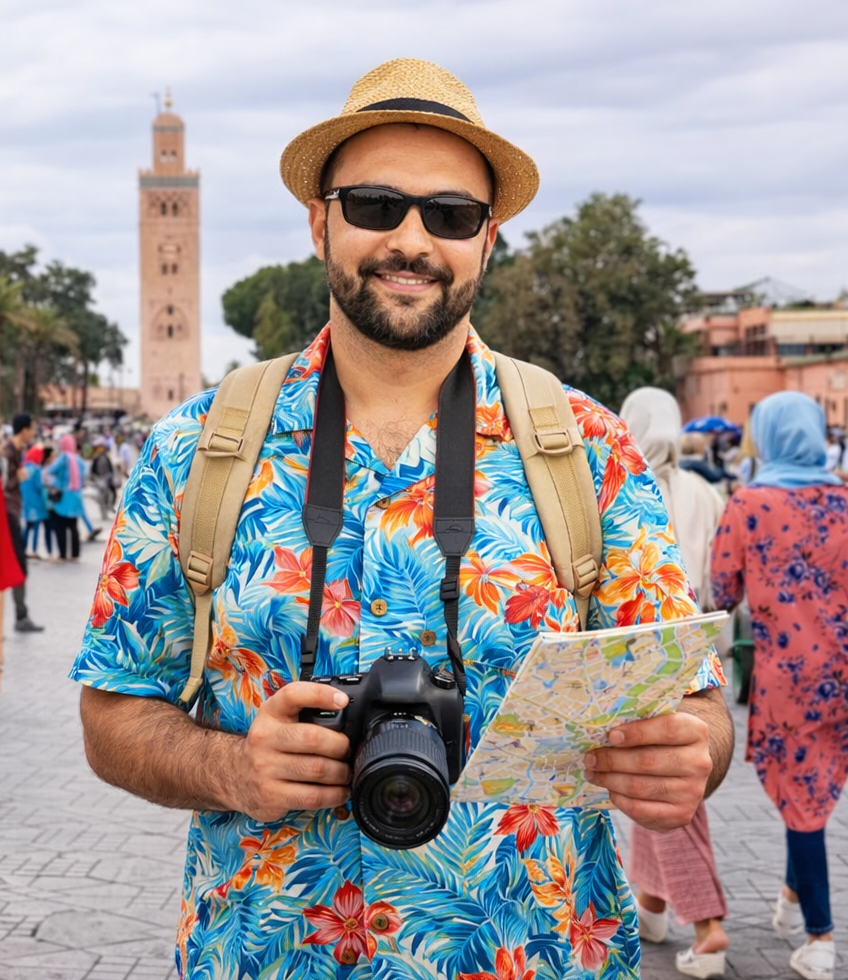
I’m the founder of “Marrakech in Morocco” — a blog dedicated to sharing authentic and practical travel experiences from the heart of Marrakech. I’m 44 years old, born and raised in this magical city that continues to inspire me every day.
