

Best Things to Do in Marrakech, Morocco
Updated
By Abdelghafour SADKI, founder of Marrakech In Morocco.
For a first visit, prioritize the historic medina and Jemaa el-Fna, Koutoubia, Bahia Palace, Ben Youssef Madrasa, the souks and Jardin Majorelle. Three days is enough for the main sights if you group them by area; five to seven days gives you time for museums, food experiences and a day trip.
Affiliate disclosure: Some links on this page may be affiliate links. If you book through a link, Marrakech In Morocco may earn a commission at no extra cost to you.
At a Glance: Marrakech Essentials
| Planning point | What to know |
|---|---|
| Top attractions | Jemaa el-Fna, Koutoubia Mosque, Bahia Palace, Ben Youssef Madrasa, El Badi Palace and Jardin Majorelle |
| How many days? | 3–4 days for the main sights; 5–7 days for a slower trip with museums, food experiences and a day trip |
| Best time | Spring and autumn are the easiest seasons for sightseeing; summer requires earlier starts, while winter brings cooler evenings |
| Best areas to stay | Medina for atmosphere and walking; Gueliz for modern restaurants; Hivernage for larger upscale hotels. Compare riads and hotels |
| Currency | Moroccan dirham (MAD). For where to exchange money and current cost context, see our Marrakech money guide. |
| Language | Darija and French are widely used; English is common in tourist-facing businesses |
| Airport | The Visit Marrakech transport guide states that Menara Airport (RAK) is about 3 km from the city centre. Official transport guide |
Marrakech by Area: Where the Main Attractions Fit Together
The simplest way to plan Marrakech is geographically. The central and northern medina sights work well together, the southern medina has its own palace-and-Mellah cluster, and Jardin Majorelle and Gueliz belong on a separate northwest part of the trip.
- Central Medina: Jemaa el-Fna, Koutoubia and the main souks. Best covered on foot.
- Northern Medina: Ben Youssef Madrasa, Maison de la Photographie and Dar el Bacha/Confluences Museum. This is the better half of the medina for a slower cultural morning.
- Southern Medina: Bahia Palace, Mellah, Dar Si Said, El Badi Palace and the Saadian Tombs. These can be grouped into one substantial sightseeing day.
- Northwest / New Town: Jardin Majorelle, Musée Yves Saint Laurent and Gueliz. Use a taxi or other transport between this area and the medina if you are short on time.
- Southwest: Menara Garden works better as a separate stop around sunset or alongside an itinerary that already heads in that direction.
What to Do in Marrakech in 3 Days: A Geographic Itinerary
Three days is enough for the core Marrakech experience, provided you do not try to visit every museum and palace. The route below groups nearby sights instead of sending you repeatedly between the medina and Gueliz.
Day 1 — Central Medina, Jemaa el-Fna and the Souks
- Morning: Start around Koutoubia Mosque and its gardens, then walk toward Jemaa el-Fna.
- Late morning to afternoon: Explore Souk Semmarine and the adjoining craft lanes at a relaxed pace. Add Le Jardin Secret if you want a garden stop without leaving the medina.
- Late afternoon: Return to Jemaa el-Fna and watch the square change as food stalls and performers become more active.
- Evening: Choose a rooftop dinner or another medina restaurant and keep the rest of the night unhurried.
Driving: Little or none if your accommodation is central; this day is designed around walking.
Day 2 — Northern Medina, Majorelle and Gueliz
- Morning: Visit Ben Youssef Madrasa before the medina becomes busier.
- Late morning: Continue to Maison de la Photographie or the Museum of Confluences at Dar el Bacha, depending on which collection interests you more.
- Afternoon: Head to Jardin Majorelle. The official garden guidance advises reserving an online ticket well in advance so you can secure your preferred date and time.
- Late afternoon/evening: Visit the Musée Yves Saint Laurent if it fits your interests, then continue into Gueliz for dinner or a more modern evening.
Driving: Allow a short taxi or other transfer between the medina and Jardin Majorelle/Gueliz; the important point is to keep these stops together rather than returning south between each one.
Day 3 — Bahia, Mellah and the Southern Medina
- Morning: Start at Bahia Palace and continue into the Mellah.
- Late morning: Visit Dar Si Said Museum, which is close to Bahia Palace.
- Early afternoon: Have lunch, then visit El Badi Palace.
- From 2:30 PM: Visit the Saadian Tombs after the midday closure, then finish with a rooftop view, traditional dinner or hammam.
Getting around: the southern-medina day is designed around walking; use a short taxi transfer only if your accommodation is outside the medina.
How to Plan 5 or 7 Days in Marrakech
Five days gives you a more relaxed city rhythm; seven days makes room for a full coastal or mountain day without sacrificing time in Marrakech.
5 Days in Marrakech
- Central Medina: Koutoubia, Jemaa el-Fna, Souk Semmarine and an evening rooftop.
- Northern Medina and northwest: Ben Youssef, Maison de la Photographie, Jardin Majorelle and Gueliz.
- Southern Medina: Bahia Palace, Mellah, Dar Si Said, El Badi Palace and the Saadian Tombs after the midday closure.
- Day trip: choose Ourika, Agafay, Ouzoud or an Atlas Mountains outing according to the time you want to spend on the road.
- Slower city day: cooking class, museum or craft shopping, then a relaxed dinner.
7 Days in Marrakech
- Day 1: Central Medina — Koutoubia, Jemaa el-Fna, Souk Semmarine and an evening rooftop.
- Day 2: Northern Medina and northwest — Ben Youssef, Maison de la Photographie, Jardin Majorelle and Gueliz.
- Day 3: Southern Medina — Bahia Palace, Mellah, Dar Si Said, El Badi Palace and the Saadian Tombs after the midday closure.
- Day 4: Day trip — choose Ourika, Agafay, Ouzoud or an Atlas Mountains outing.
- Day 5: Slower city day — cooking class, museum or craft shopping, then a relaxed dinner.
- Day 6: Full-day Essaouira trip, then return to Marrakech for dinner.
- Day 7: Choose a longer Atlas Mountains outing, a hot-air balloon morning, or a relaxed city day for food, photography and shopping.
Regional routes and mountain access can change with road and local conditions. See Marrakech’s regional route listings.
Historical Attractions in Marrakech
The Medina of Marrakech was founded in 1070–1072 by the Almoravids and was later shaped by Almohad, Saadian and Alaouite periods. UNESCO recognizes the Medina as a World Heritage site, with the Koutoubia, Bahia Palace, Ben Youssef Madrasa, Saadian Tombs, El Badi Palace, gardens and Jemaa el-Fna among its defining elements. UNESCO: Medina of Marrakesh.
Jemaa el-Fna — The Square to See Twice
Visit Jemaa el-Fna once in daylight and again after sunset. During the day, the square is quieter; later it becomes an active public space with food stalls, storytellers, musicians and performers. A rooftop terrace is useful for understanding the layout before you walk back into the square.
Jemaa el-Fna is also recognized by UNESCO as an element of the Intangible Cultural Heritage of Humanity, reflecting the square’s living traditions of storytelling, music and oral performance. UNESCO intangible-heritage entry
Practical tip: Agree a price before accepting henna, photos or performances, and use a polite “la, shukran” when you want to decline.
Koutoubia Mosque — Marrakech’s Landmark
The Koutoubia’s minaret is about 77 metres high and is a landmark of Almohad Marrakech. The mosque itself is for Muslim worship; visitors can appreciate the exterior and surrounding gardens. Official Koutoubia information
Bahia Palace — Architecture, Courtyards and Zellij
Bahia Palace is in the southern medina, making it a natural partner for the Mellah, Dar Si Said and El Badi Palace. Its late-19th-century rooms and courtyards are worth seeing for the combination of zellij, painted cedar, marble and garden spaces. Allow around 45–60 minutes if you want to look rather than rush.
Ben Youssef Madrasa — One of the Medina’s Essential Interiors
The present Ben Youssef Madrasa was built in the 16th century under the Saadian sultan Abdallah al-Ghalib. Its central courtyard and carved stucco, zellij and cedar details make it one of the strongest architectural stops in the northern medina. The official Marrakech tourism listing provides the current monument location; check the opening schedule before your visit. Official Ben Youssef information.
El Badi Palace — Ruins of a Saadian Palace
El Badi Palace was commissioned by Saadian Sultan Ahmad al-Mansur. After the Saadian period, Sultan Moulay Ismail ordered valuable materials and decoration to be removed and reused in Meknes. The dismantling is well documented, including the removal of marble columns. Yale University Press background
Saadian Tombs — A Compact Historic Stop
The Saadian Tombs form a royal necropolis associated with the Saadian dynasty. Because the complex is relatively compact, queues can affect the experience more than the amount of time needed inside. The Ministry of Culture ticket platform lists visiting hours of 9:00–17:00 for the Saadian Tombs. Official Saadian Tombs ticket information.
Dar Si Said Museum — Moroccan Decorative Arts
Dar Si Said occupies a historic house near Bahia Palace and focuses on Moroccan decorative arts. The official Marrakech tourism listing gives an adult admission of 30 MAD and lists opening hours of 10:00–18:00; schedules can change. Official Dar Si Said information.
The Mellah and Salat Al-Azama Synagogue
The Mellah was established in 1558 under the Saadian ruler Moulay Abdallah. It sits south of the main medina near Bahia Palace and El Badi. The official Marrakech tourism guide highlights the spice souk, jewelry and fabric markets, the Jewish cemetery and the Negidim and Salat Alzama synagogues as key points of interest. Official Mellah information
Ticket prices and hours are displayed for planning, not as permanent guarantees. Check the Ministry of Culture ticket platform for the palaces and tombs before visiting.
Source note: Monument hours and fees above are not permanent prices. Use the linked official tourism or site information for the date you visit.
| Sight | Area | Hours / fee | Source | Last checked |
|---|---|---|---|---|
| Jemaa el-Fna | Central medina | Public square; no entry fee | UNESCO | Oct 6, 2026 |
| Koutoubia | Central medina | Exterior and gardens free | Visit Marrakech | Oct 6, 2026 |
| Bahia Palace | Southern medina | 09:00–17:00 · 100 MAD foreign adult | Ministry of Culture | Oct 6, 2026 |
| Ben Youssef Madrasa | Northern medina | 09:00–19:00 · 50 MAD foreign adult | Medersa Ben Youssef | Oct 6, 2026 |
| El Badi Palace | Southern medina | 09:00–17:00 · 100 MAD foreign adult | Ministry of Culture | Oct 6, 2026 |
| Saadian Tombs | Southern medina | 09:00–17:00 · 100 MAD foreign adult | Ministry of Culture | Oct 6, 2026 |
| Dar Si Said | Near Bahia | 10:00–18:00 · 30 MAD adult | Visit Marrakech | Oct 6, 2026 |
| Maison de la Photographie | Northern medina | 09:30–19:00 · 50 MAD adult | Visit Marrakech | Oct 6, 2026 |
| Dar el Bacha / Confluences | Northern medina | 10:00–18:00 Tue–Sun · 60 MAD foreign adult | Visit Marrakech | Oct 6, 2026 |
| Jardin Majorelle | Northwest | 08:00–17:30; last entry 17:00 · 170 MAD · online ticketing | Official Jardin Majorelle | Oct 6, 2026 |
| Le Jardin Secret | Northern/central medina | Entry 80 MAD; tower +40 MAD | Visit Marrakech | Oct 6, 2026 |
| Menara Gardens | Southwest | 70 MAD adult listing; verify current access details | Visit Marrakech | Oct 6, 2026 |
Gardens and Parks in Marrakech
Marrakech’s gardens work best as pauses between the denser medina sights rather than as a single marathon garden tour.
Jardin Majorelle — Buy Tickets Online Before You Go
Jardin Majorelle is in the northwest of the city, near the Musée Yves Saint Laurent. The official site states that tickets are purchased online through its official ticketing website and warns that tickets from unauthorized sites are not valid. Official Jardin Majorelle information
Menara Garden — Open Space and Atlas Views
Menara Gardens are centered on a large historic basin and olive groves, with the Atlas Mountains visible on clear days. The gardens are free to enter; the pavilion is separately ticketed. Current Menara planning information
Le Jardin Secret — A Medina Garden Break
Le Jardin Secret sits on Rue Mouassine in the medina. Its official site lists admission at 100 MAD, with seasonal opening times and a separate 40 MAD tower ticket; October hours are 9:30 AM–6:00 PM. Official Le Jardin Secret information
Free Things to Do in Marrakech
You can see a substantial part of Marrakech without paying an admission fee. The best free experiences are outdoor spaces and neighborhoods rather than ticketed monuments.
- Jemaa el-Fna: Explore the square during the day and return after sunset.
- Koutoubia and its gardens: See the landmark minaret and public garden from outside.
- Marrakech souks: Walk the market lanes and watch traditional crafts without feeling obliged to buy.
- Mellah: Walk the historic Jewish quarter and Place des Ferblantiers; synagogue and cemetery visits may be separate.
- Menara Gardens: Walk the olive groves and basin; the pavilion is paid separately.
- Cyber Parc Arsat Moulay Abdeslam: Use the shaded public garden as a quieter stop between the medina and Gueliz.
These are free or partly free options; some gardens and interiors can have different access rules, so check the relevant listing before visiting.
Less-Obvious Cultural Stops in Marrakech
These are quieter or more specialized choices rather than secret attractions: useful when you have already seen the headline monuments.
Maison de la Photographie
A compact museum in a traditional riad with thousands of photographs and documents from Morocco’s modern history. Maison de la Photographie
Tiskiwin Museum
A small collection built around the historic Sahara–Marrakech trade routes, with North African and Saharan cultural objects. Tiskiwin Museum
Cyber Parc Arsat Moulay Abdeslam
A free public garden near Avenue Mohammed V, useful as a shaded pause between the medina and Gueliz. Official Marrakech garden listings
Garden of the Arts
A contemporary sculpture park that adds an art-and-outdoors stop to a trip dominated by historic monuments. Official Marrakech itinerary
Souks and Shopping in Marrakech
The souks make more sense when you treat them as a district rather than one attraction. Souk Semmarine is a major artery through the market area, while smaller souks specialize in particular crafts. Place des Ferblantiers is a natural southern extension near the Mellah.
For a souk-by-souk breakdown, see our Best Souks in Marrakech guide
- Souk Semmarine: textiles, leather and a broad mix of tourist-facing crafts.
- Souk Cherratine: leather and traditional craft activity.
- Place des Ferblantiers: metalwork and lanterns, close to the southern-medina sights.
- Ensemble Artisanal: useful for fixed-price comparison before bargaining in the souks.
- M Avenue: a more modern shopping environment in Gueliz.
Bargaining: Start respectfully, ask the seller’s price, decide what you are genuinely willing to pay and be prepared to walk away. A negotiation is easier when you are comparing quality and design rather than treating every purchase as a contest.
Read our souk bargaining guide for more detailed etiquette.
Cultural Experiences in Marrakech
Take a Moroccan Cooking Class
A half-day cooking class can combine a market visit with preparation in a riad kitchen. It is particularly useful for travelers who want context around spices, preserved ingredients and Moroccan meal structure rather than simply eating the finished dish.
Experience Gnawa Music and the Jemaa el-Fna Halqa
Gnawa music and the storytelling tradition of the square add context to Marrakech that palace visits cannot. Listen without feeling that you need to understand every performance; part of the experience is watching how the public space is used.
Try a Traditional Moroccan Hammam
A hammam can range from a neighborhood bath to a polished private spa. Ask what the session includes before booking: some packages combine steam, black-soap cleansing, exfoliation and massage, while others are much simpler.
| Type | Typical experience | Planning range | Best for |
|---|---|---|---|
| Neighborhood hammam | Simple, local and practical | 20–50 MAD | Budget travelers wanting a more local setting |
| Tourist hammam | More comfortable with tourist-facing staff | 150–350 MAD | First-timers |
| Boutique spa | Private treatment rooms and fuller service | 400–900 MAD | Couples and special occasions |
Prices vary by venue, package and season. Treat these as broad planning ranges rather than current quotes.
Activities and Tours in Marrakech
Beyond monuments and museums, Marrakech is a good base for a few bookable or guided experiences. Choose based on how much time you want to spend in the city versus outside it.
Hot-air balloon ride
A sunrise activity over the Palmeraie and surrounding countryside; allow most of the morning rather than treating it as a quick add-on. hot-air balloon guide
Cycling with Pikala Bikes
Guided cycling can be a useful way to see quieter lanes, the Mellah and parts of the city beyond the standard walking circuit. Marrakech cycling and transport guide
Camel ride near Marrakech
For a shorter camel experience without committing to a Sahara trip, compare options closer to the city. Marrakech camel ride guide
Agafay sunset and dinner
A shorter desert-style outing from Marrakech, especially useful when you do not have time for a multi-day Sahara trip. Agafay dinner-and-show guide
Marrakech at Night
Start with Jemaa el-Fna after sunset, then choose between a rooftop dinner, a traditional restaurant or a dedicated dinner show. The square itself is the essential evening activity; the show format is more useful for travelers who want a planned, seated evening.
For a planned evening, see our Marrakech dinner show guide or compare rooftop restaurants in Marrakech
What to Eat in Marrakech
Food deserves its own place in a Marrakech itinerary. The official Marrakech tourism guide highlights tagine, couscous, pastilla and Tanjia Marrakchia as core dishes to look for. Official Marrakech gastronomy guide.
Foods Worth Trying
- Tanjia Marrakchia: a Marrakech specialty traditionally slow-cooked in a terracotta vessel.
- Tagine: look beyond the standard chicken-and-preserved-lemon version and try lamb, vegetable or seasonal preparations.
- Couscous: a better choice for a leisurely lunch than a quick snack, especially on a Friday in a traditional setting.
- Pastilla: a sweet-savory pastry that can be made with poultry, fish or other fillings.
- Harira and street snacks: useful for a lighter or budget-conscious meal around the medina.
Where to Start
For a rooftop setting near the southern medina, the official tourism directory currently lists Le Mazel at Place des Ferblantiers and gives an average bill of about 150 MAD. For a more formal traditional dinner, the directory lists Dar Yacout in the medina, with Moroccan salads, pastilla, tagines, couscous and Moroccan tea on its menu. These are examples for planning, not a claim that they are the only or best restaurants in the city. Le Mazel official tourism listing · Dar Yacout official tourism listing.
Day Trips from Marrakech
Day trips work best when you match the drive to the amount of time you actually want to spend outside the vehicle. The times below are general route estimates, not operator guarantees.
- Ourika Valley: roughly 1.5–2 hours each way for many routes; a practical choice for a shorter Atlas outing.
- Ouzoud Waterfalls: roughly 3 hours each way; better as a full day.
- Atlas Mountains / Imlil: roughly 1.5–2 hours each way depending on the exact starting point and route; suitable for hiking and mountain scenery.
- Agafay Desert: roughly 30–45 minutes each way; an easy option for sunset, dinner or a shorter desert experience.
- Essaouira: roughly 2.5–3 hours each way; a full-day coastal change of scene.
- Aït Ben Haddou and Ouarzazate: roughly 3.5–4 hours each way by road; better treated as an overnight route than a rushed same-day return.
- Merzouga and the Sahara: a multi-day trip, not a day trip, if you want the desert-camp experience.
Useful guides: Ourika Valley · Ouzoud Waterfalls · Atlas Mountains · Aït Ben Haddou and Ouarzazate · Merzouga desert
Family-Friendly Marrakech
Marrakech can work very well with children if you reduce the number of major monuments per day. Menara Garden provides more open space, Jemaa el-Fna gives families plenty of food choices, and shorter palace visits are usually easier than trying to inspect every room.
For a more detailed family itinerary, see our guide to things to do in Marrakech with kids. For dress, health and travel logistics, see our tips for traveling with children in Marrakech.
Best Time to Visit Marrakech
| Season | Typical average high / low | Best approach |
|---|---|---|
| Spring · March–May | ~23–28°C / ~7–12°C | Excellent for walking, gardens and day trips. |
| Summer · June–August | ~33–36°C / ~16–19°C | Start early; on heatwave days, temperatures can exceed 40°C. |
| Autumn · September–November | ~21–31°C / ~7–16°C | Strong for medina walks, evenings and excursions. |
| Winter · December–February | ~18–19°C / ~3–4°C | Comfortable days; evenings can be cool. |
Source: Climate-Data.org Marrakesh climate data (1991–2021 normals). These are climate averages, not forecasts.
How Much Does a Day in Marrakech Cost?
Budget Your Trip’s traveler-spending data gives a broad benchmark of about 355 MAD/day for budget travel, 933 MAD for mid-range and 2,559 MAD for luxury (about $38, $101 and $277 respectively). These figures include accommodation, food, transport and sightseeing, so they are not a sightseeing-only budget. Treat them as traveler-spending benchmarks rather than quotes. Budget Your Trip cost data. See also our Marrakech cost guide.
Use the figures as a comparison point, not a quote: accommodation and activity choices can move the daily total substantially.
What to Do in Marrakech on a Very Hot or Rainy Day
- Very hot: start with Ben Youssef, Maison de la Photographie or another indoor museum, take a long lunch break, then return to gardens or Jemaa el-Fna later.
- Rainy: prioritize museums, a cooking class, hammam, shopping and longer meals rather than building your day around open courtyards.
- Heat-sensitive travelers: avoid stacking Bahia, El Badi, Saadian Tombs and long souk walks into the middle of a summer afternoon.
Practical Visitor Tips for Marrakech
- Wear practical, respectful clothing: especially when entering religious or historic spaces. See our Morocco clothing guide
- Carry some cash in MAD: small vendors and some food stalls may not accept cards.
- Ask the taxi fare before leaving: the official tourism transport guide lists regulated airport-centre fares and other transport options; for ordinary city rides, agree the price or confirm the meter before setting off. See our Marrakech taxi cost guide
- Use offline maps: the deeper medina lanes are much easier to navigate when you are not dependent on live signal.
- Plan around the heat: move outdoor walking to morning and late afternoon in hot months.
- Check tickets before travelling: especially for Jardin Majorelle, where tickets are sold online through the official ticketing website.
- During Ramadan: opening hours, meal timing and Morocco’s clock can differ from the rest of the year. Check the local schedule for your exact dates.
Getting From Marrakech Airport to the City
The Visit Marrakech transport guide states that Menara Airport is about 3 km from the city centre. It also lists airport taxis and bus 19 as the main city connections; check the current fare and schedule before arrival. Official Marrakech transport guide
Do You Need a Guide in the Medina?
No for the basic route, but a good licensed guide can add historical context and make the medina easier to understand. Independent travelers should not feel obliged to accept unsolicited guiding offers; agree the service and price before starting.
Is Marrakech Walkable?
The central medina is best explored on foot. Use a taxi or another vehicle for longer jumps between the medina and areas such as Jardin Majorelle, Gueliz, Menara or the Palmeraie. For more detail, see Is Marrakech a walkable city?.
Frequently Asked Questions About Things to Do in Marrakech
What are the best things to do in Marrakech?
Start with Jemaa el-Fna, Koutoubia, the medina souks, Bahia Palace, Ben Youssef Madrasa and Jardin Majorelle. Then add a hammam, cooking class, museum or day trip according to your interests.
Is 3 days enough for Marrakech?
Yes. Three days is enough for the principal medina sights, Jardin Majorelle and at least one cultural experience when the route is grouped by area. Five to seven days allows slower pacing and day trips.
What are some unique or less-obvious things to do in Marrakech?
Try Maison de la Photographie, the Mellah and Jewish heritage sites, Dar el Bacha and the Museum of Confluences, Cyber Parc, or a food-focused experience. These are quieter alternatives to the headline sights rather than completely undiscovered places.
What should I eat in Marrakech?
Look for Tanjia Marrakchia, tagine, couscous, pastilla and harira, plus Moroccan tea. Tanjia is especially associated with Marrakech.
How much does a day in Marrakech cost?
Budget Your Trip reports roughly 355 MAD for budget travel, 933 MAD mid-range and 2,559 MAD luxury, including accommodation, meals, transport and sightseeing. Treat the figures as broad benchmarks.
What free things can you do in Marrakech?
Walk Jemaa el-Fna, the souks and Mellah; see Koutoubia and its gardens; and visit the outdoor parts of Menara Gardens. Some museums, pavilions, synagogues and other interiors charge separately.
Do I need a guide in the Marrakech medina?
No. The central medina can be explored independently with an offline map. A licensed guide is useful for historical context or when you want help navigating the souks.
What can I do in Marrakech when it is very hot or rainy?
Start outdoor sightseeing early. During the hottest or wettest hours, use museums, a cooking class, a hammam, long lunches and covered souks; return to outdoor sights later.
Is Marrakech safe for tourists?
Marrakech is a major tourist destination, but normal city precautions still matter. Protect valuables in crowds, agree prices before paid street services and decline unsolicited guiding when you do not want it.
How do I get from Marrakech airport to the city?
The official tourism transport guide lists airport taxis and bus 19 among the main options. Check current fares and schedules before arrival.
What is the best area to stay in Marrakech?
Choose the Medina for atmosphere and access to historic sights, Gueliz for modern restaurants and shopping, and Hivernage for larger upscale hotels.
What is the best time to visit Marrakech?
Spring and autumn are usually the easiest seasons for sightseeing. Summer can be very hot, while winter days are mild but evenings are cooler.
What can you do in Marrakech in one day?
Start with Koutoubia and Jemaa el-Fna, walk the central souks, visit one major palace or museum, then return to Jemaa el-Fna for the evening. Trying to fit every major sight into one day is not realistic.
Planning Guides for Your Marrakech Trip
Supporting guides for accommodation, money, transport, safety and booking are grouped here so the main attractions guide stays focused.
A practical framework for location, budget and travel style.
Compare accommodation pricing by neighborhood.
Common situations and practical ways to avoid them.
What to check before booking excursions and multi-day tours.
Editorial method: This guide synthesizes the linked official tourism, monument, climate and traveler-spending sources. Time-sensitive prices, hours and transport details are dated in the relevant table or section; no first-hand testing is claimed where none was supplied.
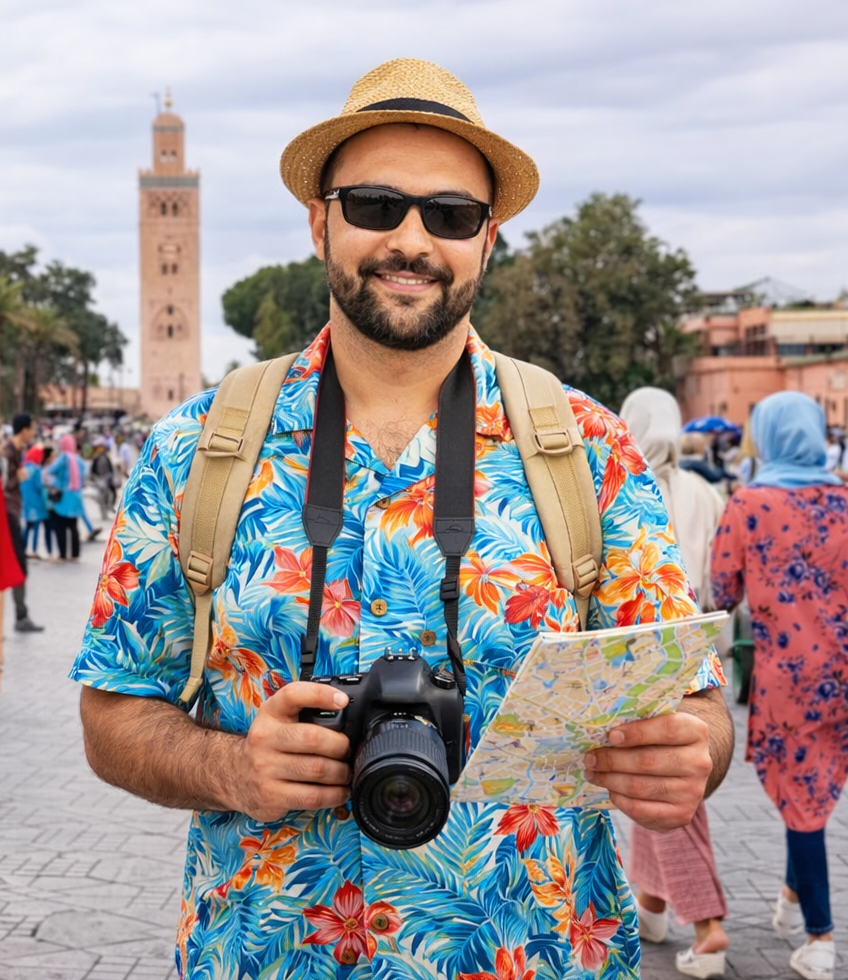
I’m the founder of “Marrakech in Morocco” — a blog dedicated to sharing authentic and practical travel experiences from the heart of Marrakech. I’m 44 years old, born and raised in this magical city that continues to inspire me every day.
