
The Short Answer: It Depends on Your Travel Style
Marrakech sits in an unusual position for international travelers. Compared to Western Europe or North America, day-to-day costs — public transport, market food, taxis, and many guided experiences — are noticeably lower. At the same time, Marrakech has a fast-growing luxury hospitality sector, and five-star riads, private tours, and spa experiences can rival prices in Paris or Dubai. That combination is exactly why “is Marrakech expensive?” doesn’t have one single answer. According to Numbeo’s 2025 Cost of Living Index — which measures everyday consumer prices (excluding rent) against New York City as a baseline of 100 — Marrakech scored 29.4, close to Rabat (29.9) and below Casablanca (31.4). By comparison, Lisbon scored 46.1, Barcelona 50.6, Rome 51, and Madrid 48.9 in the same 2025 dataset. That places Marrakech firmly on the affordable end of the spectrum for day-to-day consumer prices, though it says nothing about what any individual traveler will spend, since tourist-facing accommodation and organized activities are priced separately from local living costs.Marrakech Travel Costs by Style: Budget, Mid-Range, Comfortable, Luxury
Rather than quoting a single “average daily cost” — which tends to hide more than it reveals — it’s more useful to think about Marrakech in travel-style tiers. Each tier is shaped mainly by three decisions: where you sleep, how many guided activities you book, and how often you eat at tourist-oriented restaurants versus local spots.Backpacker & Shoestring
Shared or basic private rooms in simple guesthouses, meals mostly from local cafés and street stalls, walking or shared taxis, and one or two paid attractions rather than a packed itinerary of tours. This is the style that gets closest to Marrakech’s underlying low cost-of-living index.Comfortable Riad Traveler
A private room in a mid-range riad or 3-star hotel, a mix of local and rooftop restaurants, a handful of paid attractions and maybe one organized day trip (such as the Atlas Mountains or Ourika Valley), and a mix of walking and taxis. Our $650 case study below sits in this tier.Upgraded Experience
A well-reviewed riad or boutique hotel with a pool, more rooftop and fine-dining meals, private drivers for day trips, and premium experiences such as a hammam, cooking class, or hot-air balloon ride factored in as a normal part of the trip rather than a splurge.Five-Star & Resort
Five-star riads or resorts in the Palmeraie or Hivernage, private guides and drivers throughout, fine dining, and spa treatments. At this tier, Marrakech’s prices can approach — and in some categories match — major European capitals.Can You Really Spend 5 Days in Marrakech for $650? A Case Study
To make “it depends on your travel style” concrete, here’s a worked example: a single traveler spending 5 days / 4 nights in Marrakech with a total available budget of $650. This is presented as one illustrative way a trip could be structured — not a promise that every traveler can reproduce these exact costs, and not a claim that these are the lowest possible prices in Marrakech.| Category | Example allocation |
|---|---|
| Accommodation | $150 |
| Food | $90 |
| Activities | $330 |
| Transportation | $30 |
| Shopping | $15 |
| Planned spending | $615 |
| Remaining buffer | $35 |
| Total available budget | $650 |
Accommodation in Marrakech: What Changes the Price
Accommodation is the category where Marrakech’s price range is widest, and where the neighborhood you choose matters almost as much as the star rating.Example: The Central House Marrakech Medina
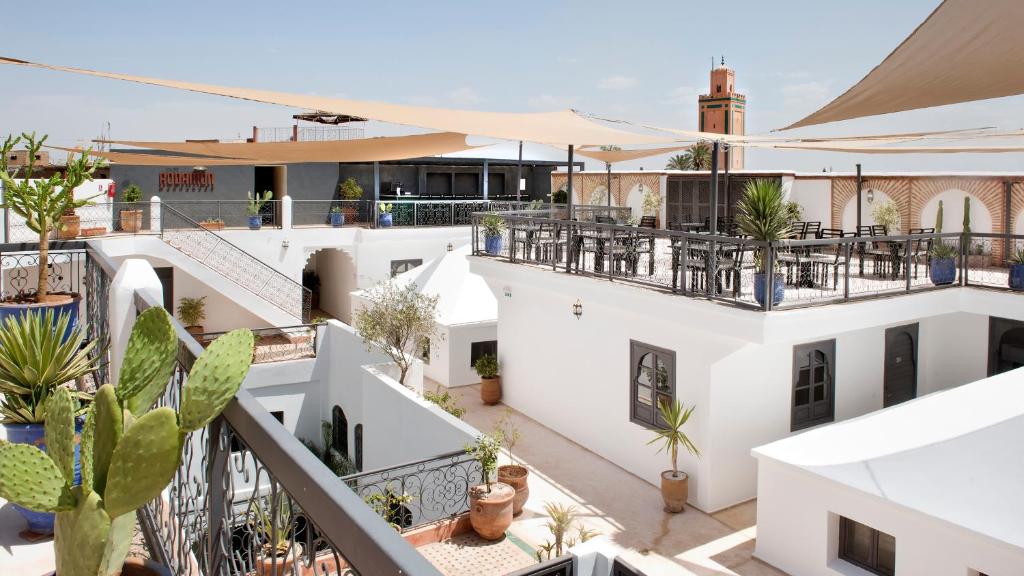
In the updated $650 case study, accommodation is allocated at approximately $150 for four nights (an average of roughly $35–40 per night) at The Central House Marrakech Medina, a riad on Amssafah 32 in the Medina’s Quartier Assouel — about a 10-minute walk from Jemaa el-Fnaa and a 20-minute walk from Jardin Majorelle. Current listings show a pool in the central courtyard, a rooftop terrace with Atlas Mountains views, air-conditioned rooms with en-suite bathrooms, and buffet breakfast (available daily, sometimes included and sometimes charged separately depending on the rate booked). The property carries strong guest ratings (around 9.1–9.2 “Excellent” across recent reviews), with cleanliness and location scoring particularly well.
Check Current Riad Availability
Riad prices shift by season and booking window. Check current availability, dates, and prices before you plan around any figure in this guide. Check availabilityMarrakech In Morocco is an independent travel guide, not a booking provider or travel agency. Some links on this site may be affiliate links, meaning we may earn a commission at no extra cost to you if you book through them.
Where You Stay Changes What You Pay
Marrakech’s neighborhoods have distinct price personalities:- Medina: The old walled city, home to the highest concentration of riads — traditional courtyard houses converted into guesthouses. Prices range from very simple budget riads to some of the most exclusive boutique properties in the city, often within the same few blocks. Walkability to Jemaa el-Fnaa and the souks is a major draw.
- Gueliz: The modern “new town,” with international chain hotels, contemporary apartments, and a more urban, less historic feel. Often a practical mid-range base with easier street access for luggage and taxis than the Medina’s narrow alleys.
- Hivernage: A quieter, leafier district known for upscale hotels and proximity to nightlife and conference venues; tends to skew toward mid-range and upscale pricing.
- Palmeraie: An out-of-town palm grove area associated with luxury resorts, private villas, and golf courses — generally the highest-priced accommodation zone, offset by the need for taxis or hotel shuttles to reach the city center.
Food in Marrakech: From Street Stalls to Rooftop Dining
Food is one of the categories where travel style creates the biggest cost swings in Marrakech, because the range of dining formats is unusually wide within a small geographic area.- Street food: Food stalls, juice carts, and small local counters selling grilled meats, tagines, soups, and pastries. This is consistently the cheapest way to eat well in Marrakech, and Jemaa el-Fnaa’s evening food stalls are the most famous example (more on that below).
- Local restaurants: Small, unpretentious sit-down restaurants serving Moroccan staples — tagine, couscous, harira soup — usually with printed or verbally quoted menus and modest prices compared to tourist-district dining.
- Casual restaurants: A step up in setting and service, often in Gueliz or near major squares, with a broader international menu alongside Moroccan dishes.
- Rooftop restaurants: A defining part of the Marrakech dining scene — restaurants with Medina or Koutoubia Mosque views, often serving a blend of Moroccan and international cuisine at a noticeable premium over street-level local spots.
- Fine dining: A growing scene of high-end restaurants, some attached to luxury riads, with tasting menus and wine lists priced closer to European fine-dining norms.
Marrakech Activities: What They Cost
Activities are where the $650 case study allocates the most money, and it’s also the category with the widest verified-price range of anything in this guide — from a $1–2 historic site entrance fee to a several-hundred-dollar hot-air balloon flight.Verified Entrance Fees
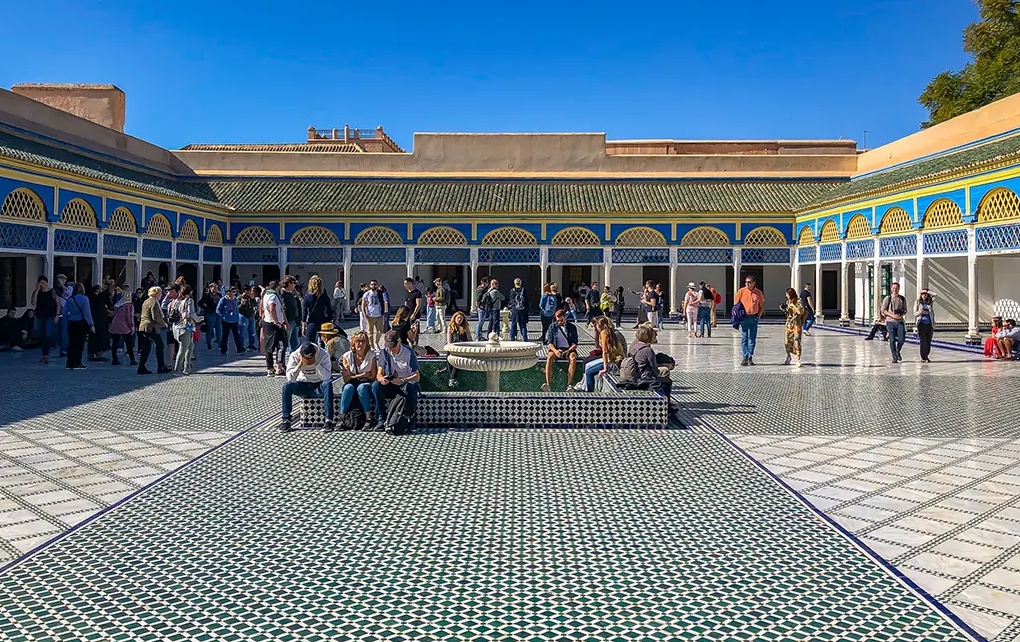
Several of Marrakech’s most-visited historic sites have modest, publicly listed entrance fees. Based on multiple current tour-operator and travel-guide listings:- Bahia Palace: Multiple current sources list adult entrance at 70 Moroccan dirhams (roughly $7 at typical exchange rates), with children under 12 often free. Some tour platforms bundle this into skip-the-line or audio-guide packages priced higher.
- Saadian Tombs: Most current sources also list adult entrance at 70 dirhams (roughly $7), though we found at least one older source citing a lower historical price — entrance fees at Moroccan monuments have been adjusted over time, so confirm the current price on arrival or through an official channel.
- Jardin Majorelle: The garden’s own ticketing system has listed garden-only entry at around 150 dirhams (roughly $15), with a combined ticket covering the garden, the Yves Saint Laurent Museum, and the Pierre Bergé Museum of Berber Arts priced around 300 dirhams (roughly $30). Third-party resale platforms often charge noticeably more than the official price, sometimes over $25–45 for garden-only entry, so booking through the garden’s official website is worth comparing against any third-party listing.
Example Itinerary Figures for Other Activities
The $650 case study also includes a hot-air balloon flight, a cooking class, and a hammam visit, priced at approximately $140, $35, and $56 respectively. We were not able to independently verify these as current, universal prices — hot-air balloon flights in particular vary widely by operator, season, and whether breakfast or hotel transfer is included, and hammam pricing depends heavily on whether you choose a simple public hammam or a private spa hammam. Treat these three figures as example itinerary figures, not current published rates, and check current pricing directly with operators before booking.| Experience | Cost | Type | Budget impact |
|---|---|---|---|
| Bahia Palace | ~70 MAD verified | Historical | Low |
| Saadian Tombs | ~70 MAD verified | Historical | Low |
| Jardin Majorelle (garden only) | ~150 MAD verified | Garden & culture | Medium |
| Cooking class | $35 example | Food & culture | Medium |
| Hammam | $56 example | Wellness | Medium |
| Hot-air balloon | $140 example | Adventure | High |

Explore This Marrakech Experience
Check current availability, dates, and prices for Marrakech tours and activities before you build them into your budget. Check availabilityMarrakech In Morocco is an independent travel guide, not a booking provider or travel agency. Some links on this site may be affiliate links.
A Realistic 5-Day Marrakech Itinerary
Here’s how the $650 case study’s activities could be sequenced across a five-day trip. This is a suggested structure, not a fixed schedule — opening hours, weather, tour availability, and your own energy levels on any given day should take priority over following this exactly.Day 1 — Arrival, Medina, and Jemaa el-Fnaa
Settle into your riad, get oriented in the Medina’s alleys, and head to Jemaa el-Fnaa as it comes alive in the early evening for your first taste of the square’s food stalls and street performers.Day 2 — Bahia Palace, Saadian Tombs, and the Medina
Visit these two historic sites in the same morning since they’re close together, then spend the afternoon exploring the souks and smaller Medina landmarks nearby.Day 3 — Jardin Majorelle and Gueliz
Book your Jardin Majorelle ticket in advance for a specific time slot — it’s Marrakech’s most-visited attraction and can sell out. Combine it with an afternoon in Gueliz for a change of pace from the Medina.Day 4 — Hot-Air Balloon and Relaxation
Balloon flights typically depart very early to catch calm morning air, so this is usually a pre-dawn start followed by a lower-key rest of the day back in the city.Day 5 — Cooking Class, Hammam, and Departure
A cooking class and hammam session make a relaxed final full day before an evening or next-morning departure, depending on your flight time.Jemaa el-Fnaa: What an Evening Actually Costs
Jemaa el-Fnaa, the main square at the heart of the Medina, deserves its own section because it’s both a free experience and a place where costs vary enormously depending on what you buy. By day, it’s a market square; by evening, it transforms into an open-air food court and performance space with dozens of numbered food stalls, fresh orange and lemon juice carts, snake charmers, storytellers, and musicians. Walking through the square, watching the performers, and people-watching from a rooftop café costs nothing beyond whatever you choose to buy. Fresh juice from one of the square’s juice stands is one of the cheapest, most iconic things to try in Marrakech. Dinner at one of the food stalls can range from a very affordable plate of grilled skewers or fried fish to a more substantial multi-dish spread — but we’re not going to quote a specific price range here, because stall prices vary by vendor, by dish, and by how confidently you negotiate, and we couldn’t verify a single reliable current figure that would hold across the square. If you want a rough sense of current prices, ask a few stalls before sitting down, since menus and pricing are usually posted or quoted directly.Hidden and Easy-to-Forget Costs
Several categories of Marrakech spending are easy to leave out of a first-draft budget entirely — and they’re exactly the kind of costs that turn a $650 plan into something noticeably more expensive if you don’t account for them upfront.- Tips: Tipping is customary in Morocco for guides, drivers, restaurant staff, and hammam attendants. Amounts vary by service and context; there isn’t one universal rate we can verify, so build a modest, flexible tipping allowance into your trip rather than relying on a fixed number.
- Airport transfers: Getting from Marrakech Menara Airport to the Medina or Gueliz is a cost many first-time visitors forget to plan for until they land. Pre-arranged hotel transfers, official airport taxis, and ride-hailing options all carry different price points and reliability trade-offs.
- Tourist taxes: Some Moroccan hotels apply a small local tourist tax per night, charged separately from the room rate — check your booking confirmation for whether this is included or added on arrival.
- Travel insurance: Often skipped in DIY budget planning, but a real cost that should be factored in before departure, not treated as optional.
- SIM cards / eSIM: Local data plans are typically inexpensive relative to many home-country roaming rates, but they’re still a real line item most itinerary templates leave out.
- Extra taxis: Beyond planned transport, unplanned taxi rides — a late return from dinner, a rainy-day shortcut — add up quickly if not budgeted for.
- Drinks: Alcohol is available in many tourist-oriented restaurants and hotel bars but is priced at a real premium compared to tea, juice, or soft drinks, and isn’t available everywhere.
- Souvenirs and souk shopping: The $650 case study allocates just $15 to shopping — a genuinely tight allowance if you plan to buy carpets, leather goods, or lamps in the souks, where negotiation is expected and prices for the same item can vary significantly between vendors.
- Optional excursions: Anything not in your original plan — a spontaneous Atlas Mountains day trip, an extra museum — is, by definition, not in your budget until you add it.
- Currency conversion fees: ATM withdrawal fees, card foreign-transaction fees, and unfavorable airport exchange rates can quietly erode a tight budget. Comparing your bank’s foreign transaction policy before you travel is worth the ten minutes it takes.
Independent Travel vs. Using a Morocco Travel Agency
Everything described in this guide — riad booking, entrance tickets, walking between sights, arranging your own taxis — is entirely achievable as an independent traveler, and plenty of visitors organize a Marrakech trip this way without ever contacting a Morocco travel agency. That said, there are specific situations where working with a Morocco travel agency genuinely simplifies a trip rather than just adding a markup:- Private tours: A private guide can go deeper into a site’s history than a self-guided visit, and can adjust pace for families or travelers with mobility needs.
- Sahara Desert trips: Multi-day trips to the Sahara from Marrakech involve long drives, remote overnight logistics (often at a desert camp), and route planning that’s genuinely easier to coordinate through an established operator than to piece together independently.
- Multi-city itineraries: Combining Marrakech with Fes, Chefchaouen, or the coast in one trip involves more moving parts — trains, buses, or private drivers between cities — where an agency can streamline the logistics.
- Family travel: Agencies can build in the kind of flexibility (private transport, adjusted pacing, kid-friendly stops) that’s harder to guarantee when self-organizing on the fly.
- Fully customized travel: If you want a itinerary built entirely around specific interests — photography, architecture, food — an agency with local knowledge can shortcut a lot of independent research.
Marrakech vs. Other Popular Destinations
One of the most useful ways to answer “is Marrakech expensive?” is to place it next to destinations travelers often compare it to. The most consistent, methodologically comparable dataset we found for this is Numbeo’s Cost of Living Index, which measures everyday consumer prices (excluding rent) against New York City as a baseline of 100. Using figures from the same 2025 edition of that index — so the numbers below are internally consistent rather than mixed across different years or different indexes — here’s how Marrakech compares to several cities frequently mentioned alongside it:| City | Cost of Living Index |
|---|---|
| Cairo, Egypt | 19.6 |
| Marrakech, Morocco | 29.4 |
| Lisbon, Portugal | 46.1 |
| Madrid, Spain | 48.9 |
| Barcelona, Spain | 50.6 |
| Rome, Italy | 51.0 |
Is Morocco Expensive Beyond Marrakech?
Travelers researching “is Marrakech expensive” are frequently also asking about Morocco more broadly, since Marrakech is often one stop on a longer Morocco itinerary. Based on the same Numbeo 2025 index referenced above, Morocco’s major cities cluster fairly closely together: Casablanca scored 31.4, Rabat 29.9, and Marrakech 29.4 — all in a similar range, with Casablanca, as the country’s main economic hub, running slightly higher. A more recent Numbeo update reported in early 2026 identified Tangier as having overtaken Casablanca as Morocco’s most expensive city on this index, at 36.12, reflecting rising housing and services costs there rather than a nationwide shift. The practical takeaway is that Morocco’s major cities are broadly similar in day-to-day cost terms, and the bigger cost swings within a Morocco trip tend to come from accommodation choice and tourist-activity spending — the same two factors that drive most of the variation within Marrakech itself — rather than from which specific Moroccan city you’re in.Frequently Asked Questions
Is Marrakech expensive for tourists?
It depends heavily on travel style. Day-to-day consumer prices in Marrakech are low by international standards — Numbeo’s 2025 Cost of Living Index placed the city at 29.4, well below cities like Lisbon (46.1) or Barcelona (50.6). But tourist-facing costs like guided activities, hot-air balloon flights, and luxury riads can push a trip’s total cost up significantly, so “expensive” or “affordable” both apply depending on which experiences you choose to book.How much money do I need for 5 days in Marrakech?
There’s no single verified figure that applies to every traveler. This guide’s $650 case study for one traveler over 5 days / 4 nights is one illustrative structure — allocating $150 to accommodation, $90 to food, $330 to activities, $30 to transportation, and $15 to shopping — built around a mid-range, moderately activity-heavy travel style. A more budget-focused trip with fewer paid activities, or a more luxury-focused trip with a higher-end riad and private guides, would land at a different total.Is Marrakech cheaper than Europe?
For everyday consumer prices, generally yes, based on Numbeo’s 2025 index: Marrakech’s score of 29.4 is well below Lisbon (46.1), Madrid (48.9), Barcelona (50.6), and Rome (51.0) in the same dataset. That comparison covers groceries, local transport, and casual dining rather than tourist-specific costs like entrance fees or hotel rates, which follow their own separate pricing patterns.Is food expensive in Marrakech?
Local restaurants and street food, including the stalls at Jemaa el-Fnaa, are generally inexpensive compared to Western Europe or North America. Rooftop restaurants and fine dining aimed at tourists cost noticeably more than local spots, though usually still less than equivalent upscale dining in major European cities. We haven’t published specific current menu prices here, since they change frequently — check current listings directly before budgeting.How much does a trip to Marrakech cost?
There’s no single answer, because trip cost depends on flights (not covered in this guide), accommodation tier, and how many paid activities you book. This guide’s $650 case study covers ground-level costs (accommodation, food, activities, local transport, and shopping) for one traveler over 5 days, but a full trip budget should also add international flights and travel insurance.Is Morocco expensive?
Based on Numbeo’s 2025 Cost of Living Index, Morocco’s major cities cluster in a similar affordable range: Marrakech at 29.4, Rabat at 29.9, and Casablanca at 31.4, with a more recent update placing Tangier higher at 36.12. Compared to Western Europe or North America, Morocco is generally on the affordable end for day-to-day costs, though tourist-specific spending varies by destination and activity choice.Is Marrakech expensive for Americans?
For US travelers, Marrakech’s lower cost-of-living index relative to major US cities means everyday costs like local meals, taxis, and market shopping generally go further than they would at home. As with any nationality, the total trip cost still depends heavily on accommodation tier and how many paid tours or activities are booked, plus the cost of international flights from the US.Is Marrakech expensive for UK travelers?
The same underlying pattern applies: Marrakech’s day-to-day consumer prices sit well below the UK’s on cost-of-living comparisons, so travelers from the UK typically find local meals, transport, and shopping noticeably cheaper than at home. Flight costs from the UK and accommodation choice remain the biggest variables in total trip cost.How much should I budget for activities?
This is highly dependent on which activities you choose. Several of Marrakech’s most-visited historic sites — Bahia Palace and the Saadian Tombs — have modest, verified entrance fees around 70 Moroccan dirhams (roughly $7) each. Jardin Majorelle’s official garden-only ticket is priced around 150 dirhams (roughly $15). Premium experiences like a hot-air balloon flight cost substantially more and vary by operator, so it’s worth deciding in advance whether one or two splurge activities fit your overall budget, as they did in this guide’s $330 example activities allocation.Is it cheaper to organize Morocco independently or use a Morocco travel agency?
We don’t have verified evidence that a Morocco travel agency is cheaper than independent planning — often the opposite is true, since an agency’s value lies in convenience, local expertise, and logistics for things like multi-day Sahara trips, rather than in lower prices. Independent travel works well for a single-city Marrakech trip; an agency tends to add more value for complex, multi-city, or remote-destination itineraries.The Bottom Line
Marrakech isn’t uniformly cheap or uniformly expensive — it’s a city where the underlying cost of everyday life is genuinely low by international standards, while the tourist-facing top end of the market (luxury riads, premium guided experiences, five-star spa treatments) can compete with major global destinations. The $650 / 5-day case study in this guide shows one workable way to structure a mid-range trip, with activities — not accommodation — as the single biggest cost driver. Whether your own Marrakech trip lands closer to that figure, well below it, or well above it comes down almost entirely to the choices you make about where you stay, how many premium experiences you book, and how you eat — not to some fixed, unavoidable “Marrakech price.”Best Marrakech Tours and Activities to Book
Looking for the best Marrakech tours and activities for your trip? Below are the experiences referenced throughout this guide — from low-cost historic sites to bigger-ticket splurges — so you can compare what each one adds to your Marrakech itinerary and budget before you book.
Bahia Palace Entry Ticket
A 19th-century palace in the Medina known for its carved ceilings, zellige tilework, and shaded courtyards — one of Marrakech’s lowest-cost must-see historic sites.
Check availability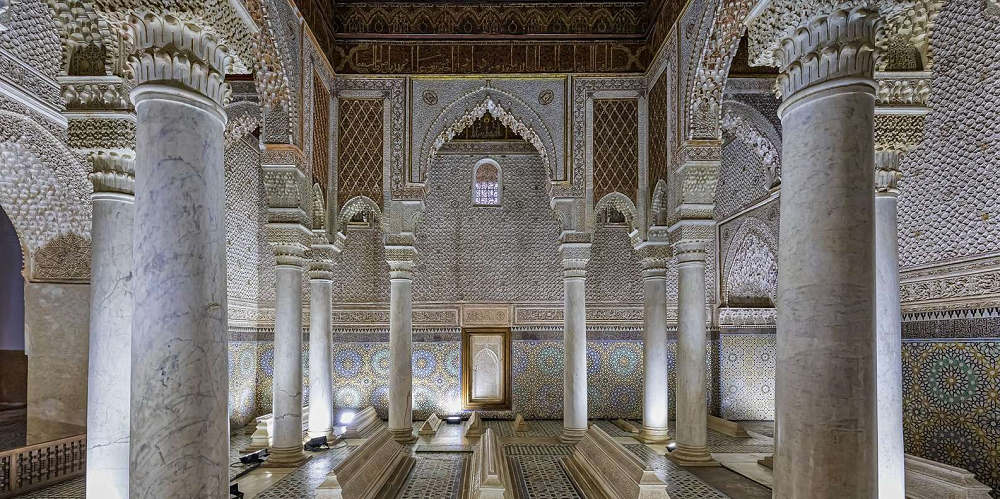
Saadian Tombs Entry Ticket
A 16th-century royal necropolis hidden behind the Kasbah Mosque, with the famed Hall of Twelve Columns — a quick, inexpensive stop near Bahia Palace.
Check availability
Jardin Majorelle & YSL Museum
Marrakech’s most-visited attraction: a cobalt-blue villa, cactus garden, and the Yves Saint Laurent Museum. Book a timed slot in advance — it regularly sells out.
Check availability
Sunrise Hot-Air Balloon Flight
An early-morning flight over the Marrakech countryside and Atlas Mountains foothills — the single biggest splurge in most Marrakech activity budgets.
Check availability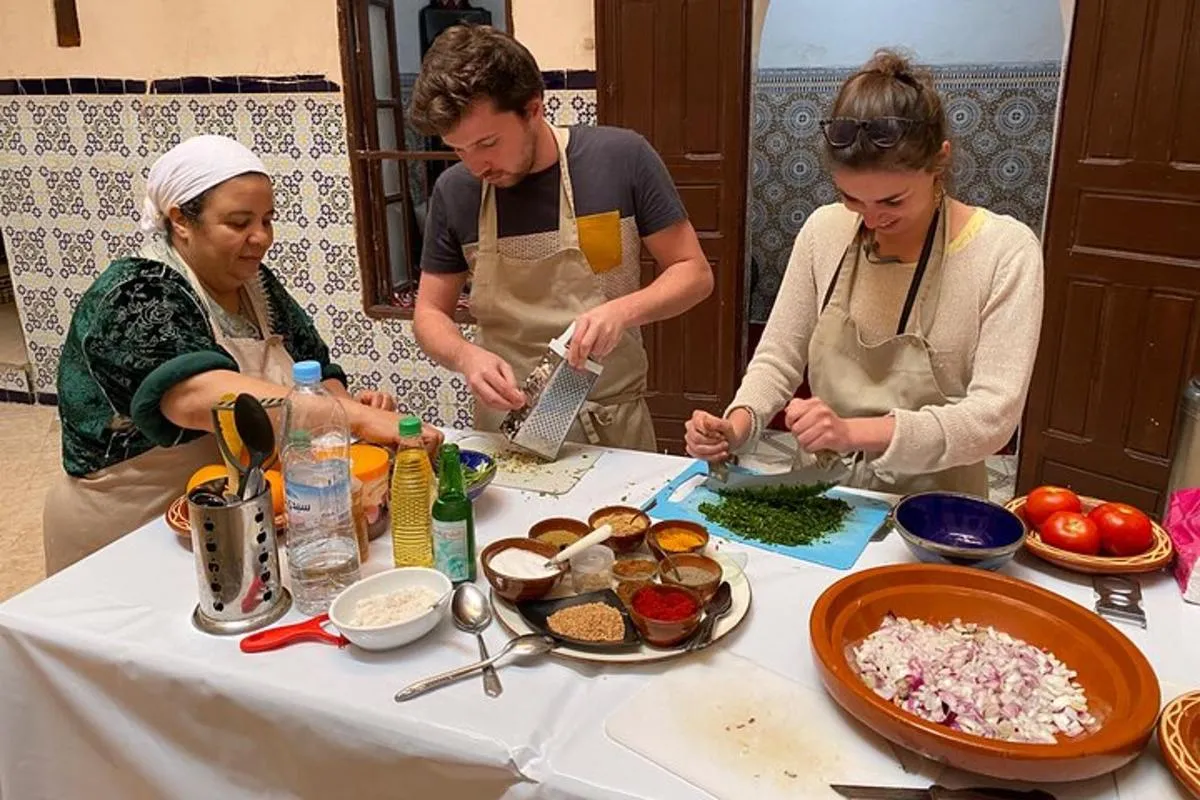
Moroccan Cooking Class
A hands-on introduction to tagine, couscous, and Moroccan spices, usually including a market visit — a popular mid-budget way to go deeper than a restaurant meal.
Check availability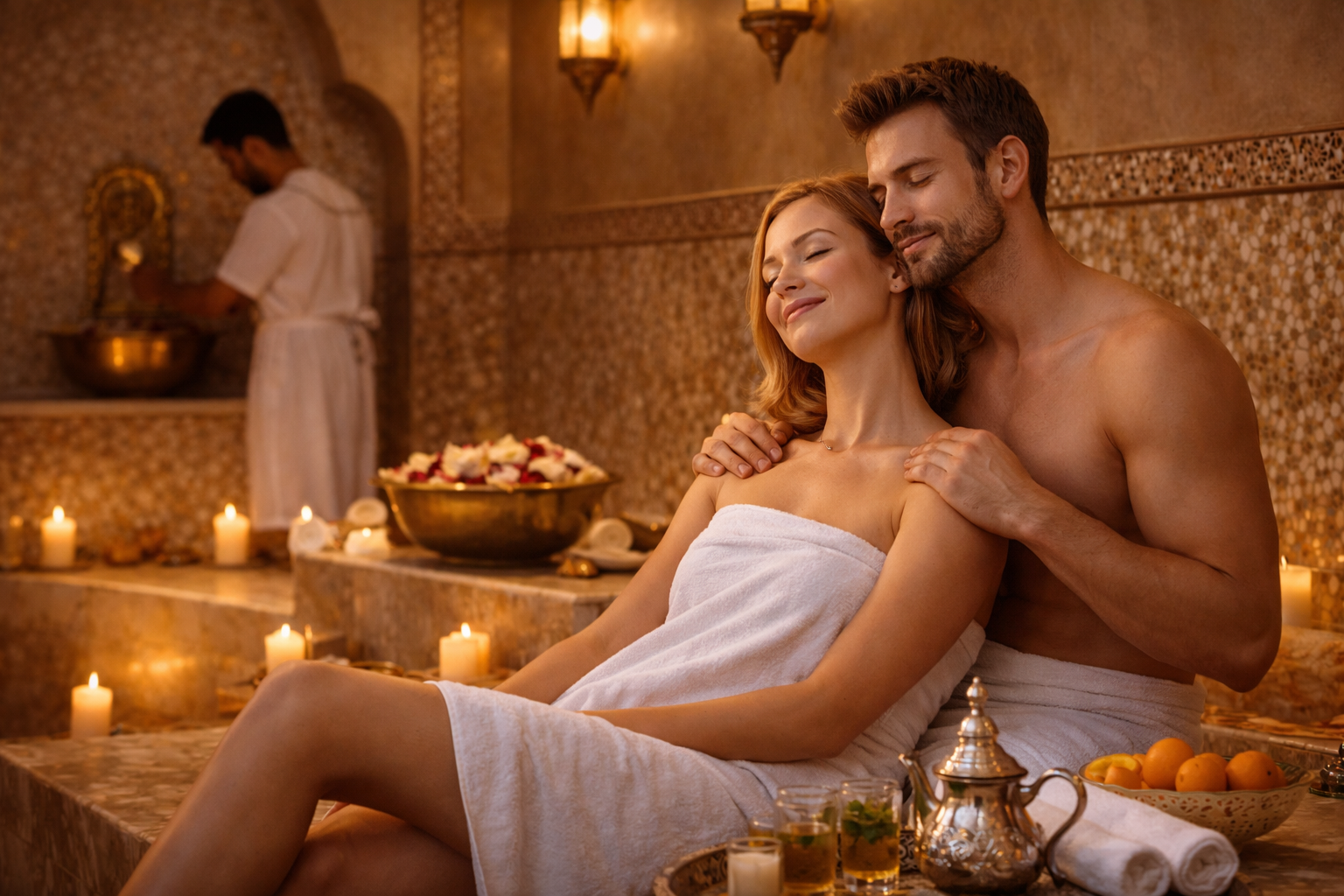
Traditional Hammam Experience
A Moroccan steam-and-scrub ritual, available from simple public hammams to private spa versions — a wellness stop worth planning a rest day around.
Check availabilityPrices for all tours and activities vary by date, season, and provider — check current availability and pricing directly before booking. Marrakech In Morocco is an independent travel guide, not a booking provider or travel agency; some links above may be affiliate links.
I’m the founder of “Marrakech in Morocco” — a blog dedicated to sharing authentic and practical travel experiences from the heart of Marrakech. I’m 44 years old, born and raised in this magical city that continues to inspire me every day.
